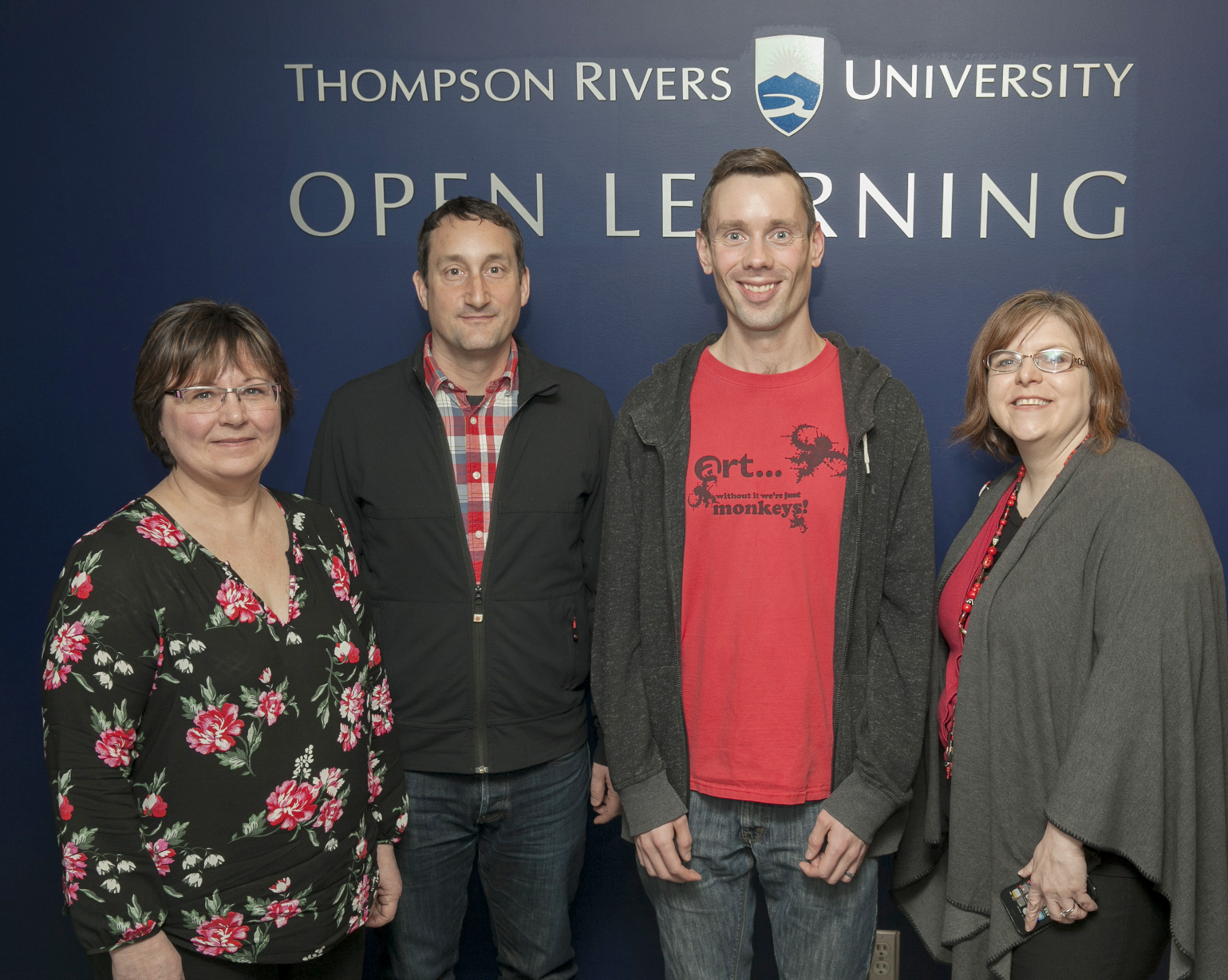
Editing Team Photo

Word files of the Course Guide template and the Open Learning Faculty Member template are available in O drive, 4 Editing Resources. Feel free to share the Word templates as a time-saver for developers. It may be quicker to fill-in or revise sections in a Word file compared to copying the information from this site…
Here’s an open, online resource that could be a useful guide for editors (or writers, or students) to verify or to explain Canadian regionalisms or idioms. Dollinger, S. (Chief Editor), & Fee, M. (Associate Editor). (2017). DCHP-2: The dictionary of Canadianisms on historical principles (2nd ed., with the assistance of B. Ford, A. Gaylie, & G. Lim)….
Required Hardware, Software, Computer Skills, and Other Resources • change to http://www.tru.ca/distance/services/student-orientation/technical-basics.html Technical Support change two URLs: • “…the correct hardware and software required for your course at http://www.tru.ca/distance/services/student-orientation/technical-basics.html.” • “… go to the IT Service Desk at http://www.tru.ca/distance/contact/helpdesk.html.” Student Café • Change to http://www.tru.ca/distance/services/student-orientation/online-discussions.html
The editors’ team has started bi-weekly professional development seminars. We take turns facilitating the meetings, and we co-create the content to share our expertise and fill-in gaps in our knowledge. We have not chosen a way to reify or apply the new learning, but I’m sure a creative expression of our learning will present itself…
Bob Joseph’s CBC article addresses how and why the terminology we use may be changing: “One of the key messages I give in my workshops and training: ‘Go with what they are calling themselves.’ […] it’s about showing respect and using the term that individuals and organizations have chosen for themselves.” Joseph, B. (2016, September 21). Indigenous or Aboriginal:…
The editing team participated in an Editors Canada webinar in January 2017: “Creating and Maintaining In-House Style Guides” presented by Elizabeth Macfie. It was a great webinar, and I’m sure we will discuss her ideas often in 2017 as we improve and revise our OL style guide. Elizabeth covered her process for building and maintaining a style guide, and she offered…